Digital records
Captures the essentials at each step, with as few required fields as possible and validation prompts to keep records complete.
Creates traceability at the point where records currently break down.
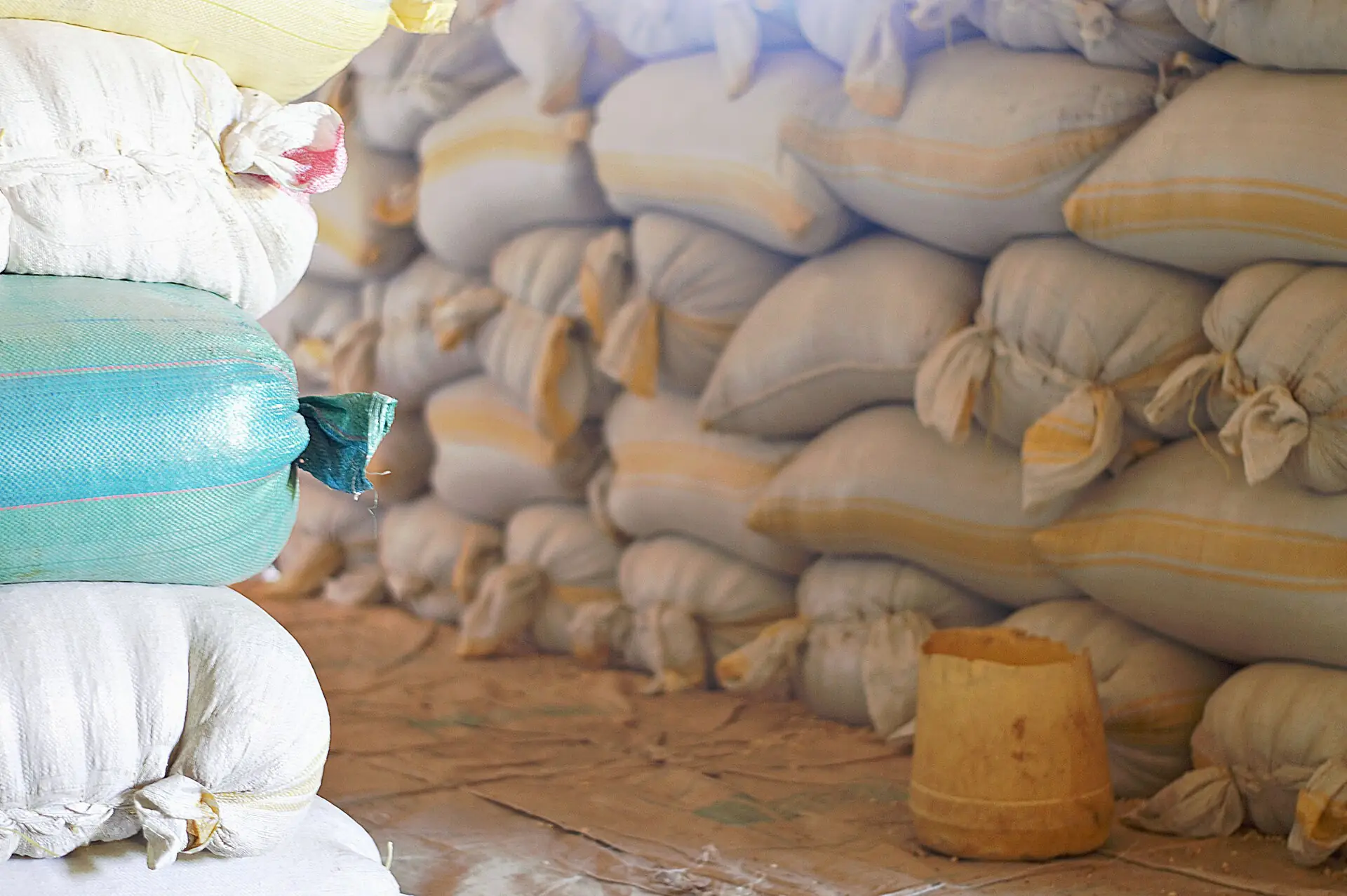
Photo: Cut angles, CC BY-SA 4.0
The tool replaces paper intake, storage and dispatch notebooks with short smartphone and tablet forms that work offline and sync when there is signal. Every intake gets a batch code, so each bag can be followed from the farmer who supplied it to the buyer who received it.
This is a proof-of-concept implementation study, not a large impact evaluation. It tests whether the tool works in a real warehouse and what it would take to scale it, through five work packages over twelve months.
Farmer or supplier, location, contact and the crops they bring.
Date, crop, quantity, moisture reading and a visual quality check.
A unique batch code or QR label links the bags to their source, date and quality records.
Storage location, time in store, periodic checks, pests and condition notes.
Buyer, date, quantity and batch codes, plus any rejection feedback.
Captures the essentials at each step, with as few required fields as possible and validation prompts to keep records complete.
Creates traceability at the point where records currently break down.
A dashboard flags high moisture, long storage, missing source information, visible spoilage and poor storage conditions.
Gives operators practical warnings without needing complex AI.
An interpretable model, such as logistic regression, a decision tree or a random forest, trained on pilot data to score batch-level spoilage or quality risk.
Tests how structured records can support AI-enabled food-safety decisions, with its limitations reported openly.
Warehouse staff, farmers, suppliers and buyers take part from the start as co-designers, testers and evaluators.
Map current intake, storage and dispatch practice, interview 15–20 farmers and suppliers, estimate the cost of avoidable losses and co-design the workflow.
Build the offline-capable mobile and web tool, with a user guide and data dictionary.
Run the tool with real produce and suppliers: register farmers, record batches, link them to dispatches and log what works.
Clean the pilot data, test an interpretable spoilage and quality risk model, and add a risk indicator to the dashboard.
Hands-on training, evaluation, a business case and learning note, a stakeholder event and the open-source release.
What the pilot sets out to show at the Renai Farms warehouse in Bvumbwe.
farmers and suppliers registered and linked to their produce
Project planproduce batches recorded with source, intake, quality and storage information
Project planof batches with complete records from intake to dispatch
Project planor less, on average, to record a batch after training
Project planbuyer dispatches linked to traceable batch records
Project planof qualifying risk conditions flagged by the system
Project planThese are targets from the project plan, not results.
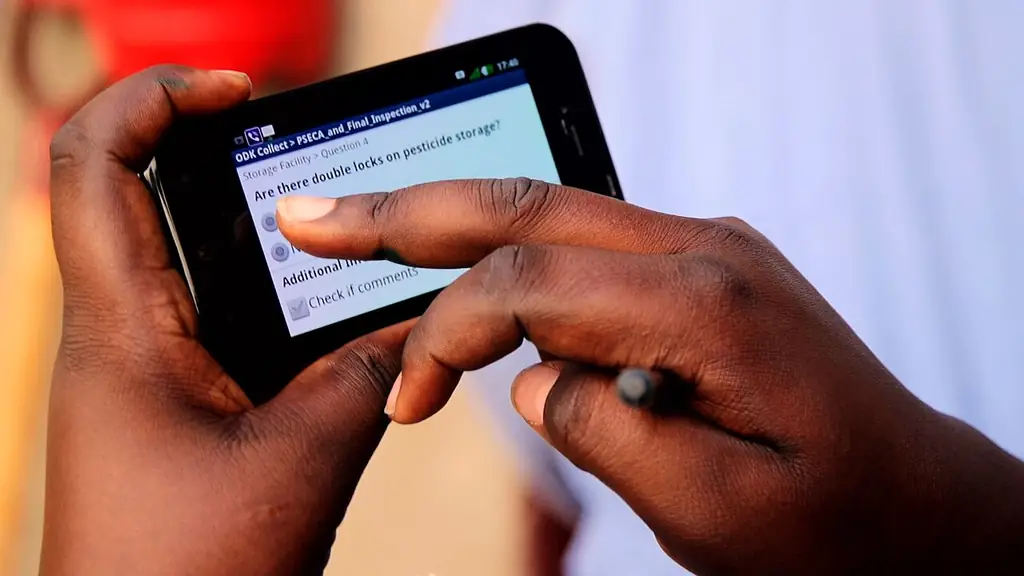
Field surveys and pilot data are collected with ODK, open-source data collection that works offline on Android phones and tablets, and managed on the project’s own ODK Central server.
Sign in to ODK CentralAccess is limited to project staff and enumerators with an account.
Photo: ODK Collect in use in another programme. President’s Malaria Initiative, public domain